
...reopen for up to six months. Until then, the Strait stays nearly closed. The world pays. And no one, including the man who started this, can say when it ends, notes Prem Panicker in his must read blog on the Iran War.
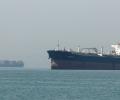
As tensions in the Middle East approach a critical juncture, reports have surfaced regarding a draft memorandum of understanding between the United States and Iran aimed at de-escalating the ongoing conflict, Iranian state media reported on Wednesday.

Indian benchmark indices Sensex and Nifty surged significantly in early trade, mirroring a global rally and a sharp decline in crude oil prices following the finalisation of a peace deal between the US and Iran to end their 107-day conflict and reopen the Strait of Hormuz.

India's economy recorded a robust 7.8 per cent growth in the April-June quarter of fiscal year 2026-27, surpassing both market expectations and the Reserve Bank of India's forecast. This strong performance positions India as the world's fastest-growing major economy, demonstrating resilience despite global economic uncertainties and geopolitical tensions, including the conflict in Iran. The Ministry of Statistics and Programme Implementation highlighted the sustained growth momentum amidst global headwinds.

Three Indian-flagged crude oil tankers, Desh Vaibhav, Desh Vibhor, and Sanmar Herald, successfully transited the Strait of Hormuz and are en route to India, even as Iran announced the closure of the critical waterway following Israeli strikes in Lebanon.

Chinese President Xi Jinping has called for the Strait of Hormuz to remain open for normal passage of ships, describing it as an 'international waterway' amid rising tensions between the US and Iran.

Economy passengers are paying more year-on-year while business travellers are paying less.

Gold futures saw a significant rise for the second consecutive day, driven by strong overseas market rallies, increased safe-haven demand due to geopolitical uncertainties, and a weaker US dollar. This surge coincided with the Reserve Bank of India's decision to maintain its repo rate, reflecting a focus on growth amidst global inflation concerns and easing oil prices.

In his first major national address since hostilities began, Trump said the ongoing military campaign, dubbed 'Operation Epic Fury', has delivered 'swift, decisive, overwhelming victories'.

Formula One chief executive Stefano Domenicali announced that the sport will feature more sprint races in 2027 than the current six, while emphasising the importance of maintaining their 'scarcity value' to ensure commercial appeal.

'What we have yet to see on either the US or the Iranian side is willingness to compromise on their ultimate demands and the flexibility to reach an agreement to end the war.

US President Donald Trump's proposed peace deal with Iran has drawn significant criticism from both Republican and Democrat senators, who express deep concerns that it would legitimise Tehran as a 'dominant force' and potentially allow it to retain control over the Strait of Hormuz and uranium enrichment capabilities.

President Trump has been briefed on potential military actions against Iran, including strikes on infrastructure and control of the Strait of Hormuz, even as negotiations continue. He maintains economic pressure is the primary strategy, while legal questions arise over war powers.

The US Central Command announced a new wave of strikes against Iranian military infrastructure, aiming to degrade Tehran's ability to threaten civilian mariners and commercial vessels. This comes as US President Donald Trump described the situation as a 'skirmish' and suggested Iran wants to 'make a deal,' while Iran's Foreign Minister warned of a 'decisive response' to any aggression.

Reliance Industries shares rose over 1 per cent after the company reported record quarterly core profit and EBITDA for the June quarter, driven by strong performances in its oil-to-chemicals and telecom businesses.

'I suspect that Bangladesh being given permission stuck in India's official craw, and this story was an attempt to balance the scales by giving the impression that a similar waiver had been given to India as well.'

Former US President Donald Trump has criticised Iran's stance on the Strait of Hormuz, calling it a form of 'extortion' amid ongoing negotiations for a peace deal. The remarks come as Iran considers imposing transit fees on vessels crossing the strategic waterway.
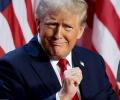
US President Donald Trump announced that a deal to end the war with Iran would be signed on Sunday, with the strategic Strait of Hormuz immediately becoming 'open to all'. This follows indications from Pakistan that negotiations were in their final stages, though Iran has yet to comment on the timeline.

The Gulf countries on Monday welcomed a peace deal reached between the US and Iran to end their conflict and called for protection of maritime routes and freedom of international navigation, including the uninterrupted flow of traffic through the Strait of Hormuz.

Indian benchmark equity indices, Sensex and Nifty, extended their rally for a fifth consecutive session, driven by optimism surrounding a potential US-Iran peace deal and a significant drop in crude oil prices. Despite hawkish remarks from the US Fed, investors remain hopeful that easing energy prices could temper inflationary pressures.

Two commercial vessels, an oil tanker and a cargo ship, carrying a total of 22 Indian nationals, were hijacked by armed pirates in separate incidents off Yemen and Somalia. All Indian crew members on both vessels are reported to be safe, according to the latest information from the shipping ministry and the External Affairs Ministry.

The question is no longer whether the war will expand. It has. The next few days will tell us whether the war stabilises around Hormuz or whether the Strait itself becomes the trigger for a far larger rupture. What to watch for over the next 48 hours is simple: Any move by the US toward direct naval control of the Strait; any credible Iranian attempt to disrupt or mine shipping lanes and, critically, whether energy infrastructure in the Gulf continues to be targeted.If those lines are crossed in tandem, the war will no longer be containable within the region.

Former Central Command chief David H Petraeus suggests the US and Iran are likely to extend their ceasefire beyond the initial two-week period, citing willingness from both sides to continue negotiations.
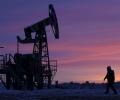
Oil prices are expected to remain elevated due to disruptions in the Strait of Hormuz, with both the US Energy Information Administration (EIA) and Rabobank International forecasting firm prices and a potential surge above $100 a barrel if disruptions worsen.

'If you listen to a rowdy in a class, he will keep on bullying you.' 'India can say do whatever you want. We will not compromise on anything.'

'Iran cannot trust the USA because it considers the USA to be Israel-controlled. And no, the IRGC is not going to accept anything else but major US concessions.'

The United States, which entered this war in expectation of a short, sharp win along the Venezuela model, is now preparing for deeper involvement in a conflict it does not fully control, without the allies it typically relies on, against an adversary that is not behaving as expected, in a global environment that is already absorbing economic shock. Prem Panicker continues his must read daily blog on the Gulf War.

Iran's national soccer team will sleep in Mexico and travel to the US on the days of its three FIFA World Cup matches after Washington declined to host the squad for the tournament.

Trump emphasised that diplomatic discussions remain ongoing. At the same time, he issued a stark warning, saying that failure to reach an agreement could trigger military action.

US President Donald Trump has claimed that Iran's missile capabilities have been severely degraded, saying Tehran now possesses only a fraction of the arsenal it had before recent hostilities.

Iranian Foreign Minister Seyed Abbas Araghchi spoke with Indian counterpart S Jaishankar to discuss the West Asia crisis, following discussions with Russian President Vladimir Putin.

Egypt, Pakistan, Saudi Arabia and Turkey met in Islamabad in what analysts say is the formal opening of a new diplomatic formation that could reshape the post-war regional order. Their immediate goal is a ceasefire; their larger ambition is to ensure that neither Iran nor Israel emerges from this war in a dominant position. Pakistan's foreign minister then flew directly to Beijing and mooted a Chinese role as guarantor of any eventual agreement. Prem Panicker continues his must read daily blog on the Gulf War.

India is hosting the BRICS summit, leveraging the platform to address global trade tensions and champion the developmental priorities of the Global South, including food, energy, and supply chain security. The summit, attended by leaders like President Xi Jinping and Vladimir Putin, will focus on resilience, innovation, cooperation, and sustainability, with India aiming to strengthen intra-BRICS collaboration and discuss global matters. The expanded BRICS grouping represents a significant portion of the world's population and GDP, making its discussions crucial for global economic stability.

Following a US agreement to a ceasefire, Iran claims victory and outlines conditions for a lasting peace deal, including control over the Strait of Hormuz and the removal of sanctions.

For weeks, the war skirted the edge of catastrophe without tipping over. Missiles flew, there was much destruction, commanders were assassinated, cities across the Gulf and even in Israel struggled to absorb the shock. But one line held: Energy infrastructure, the arteries of the global economy, remained largely untouched. That is no longer true. Prem Panicker continues his must read daily blog on the Gulf War.

India has denied making any payments to Iran to secure safe passage for its vessels through the Strait of Hormuz, following reports that Indian vessels were fired upon in the region.

Prime Minister Narendra Modi celebrated India's 7.8 per cent GDP growth in the April-June quarter, attributing it to the collective strength of the people despite global uncertainties. He criticised "doomsayers" as the economy showed resilience, exceeding expectations even amidst international conflicts and supply chain issues.

Iranian Foreign Minister Abbas Araghchi said his trip to Islamabad was "very productive" and involved "good consultations" with Pakistan's top leadership amid uncertainty over the second round of peace talks to resolve the war in West Asia.

Karex, the Malaysian company that makes roughly one in five of the world's condoms -- about five billion a year, supplying Durex and Trojan among others -- announced this week that it is raising prices by up to 30 percent. The reason is the Strait of Hormuz.

10 stocks from the Nifty 200 index that offer good growth potential and scope to deliver decent returns from current levels, based on brokerage estimates.
